

No perfect people allowed
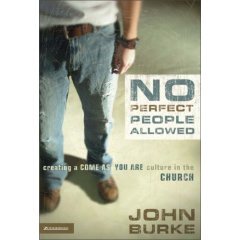 On my way to the airport I passed a church that had a sign that said “No perfect people allowed”. I found that quite intriguing and looked for the phrase on the Internet. It turns out that it is the title of a book written by a John Burke. According to Amazon, this book “challenges Christian leaders to engage in the messy art of creating the right culture to reach our postmodern, post-Christian society. Through real stories of Gods perfect work in the lives of imperfect people, you will experience the power of an authentic church community and learn how to deconstruct barriers and bring hope and healing to Americas most unchurched generation”.
Frankly, I still don’t get it. Does this mean that perfect people (assuming such thing exists) do not need to go to church? I don’t think so, churches are first and foremost about worshiping, and this applies to everyone. Does it then mean that the church expects people to have imperfections and keep them? Unlikely, it is clear that all churches have a pretty clear defined image of how people should be and behave.
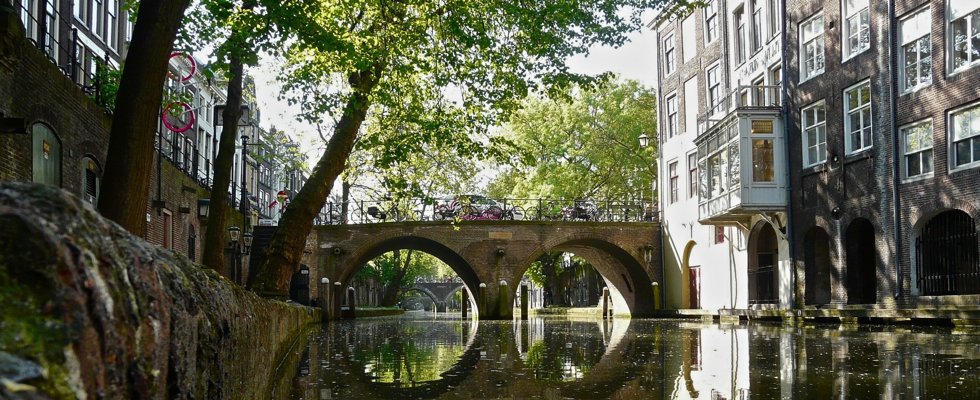
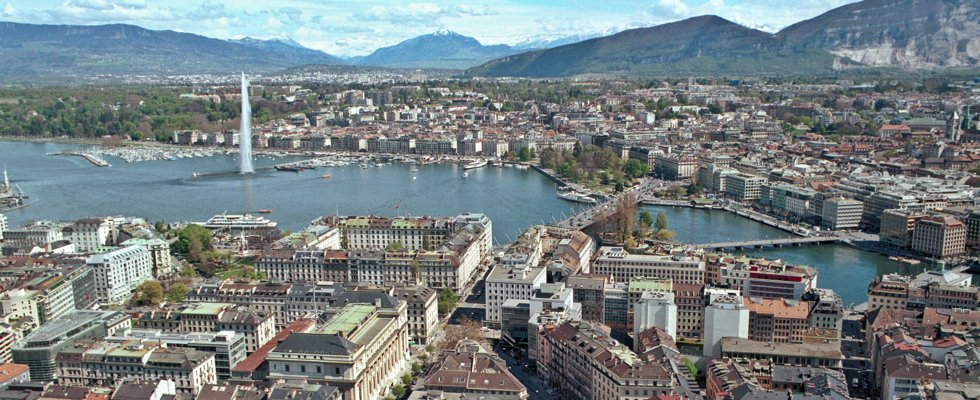
The truth is that I fully understand what this book is all about. It is about getting more people to church, accepting more people who previously would have been social outcasts. This is something that the catholic church has long done. It is easier to cater to the imperfect, as they are a much, much larger group. On the other hand, Protestants have historically had “higher standards”, marginalizing sinners until they truly repent, although this has clearly changed over time. At least that is my perception, having been raised in lutheran Utrecht and calvinist Geneva. The problem is that since so many people do no longer attend church, it has finally become impossible for any religion in the Western world, even in small towns, to hurt those sheep who abandon the herd by excluding them from the group. It is therefore necessary to move to plan B. That is what John Burke proposes, reaching to a new demographic to become relevant again.
This strategy is hardly new. We have seen this happen many times in the Western World. In the 60’s Pope Paul VI arguably started the revolution at the Second Vatican Council, but society has kept modernizing much faster than any church and that is why religious people keep looking for solutions to the exodus that most churches are suffering. The problem that I see is that like all products who change their image in order to appeal to new customers, they take the risk of losing their identity. Phony products don’t appeal to their original audience nor to the new target group.
Abandoning faith during adolescence was a difficult decision for me. Being an atheist in the early eighties was much more difficult then than it is today. Who knows, if I had faced hardships my belief in the lack of a God could have been shaken and I may have been drawn back to religion. However, this is totally impossible today. The lack of certitudes displayed by all western religions is so obvious that it has become part of the problem. Nobody likes presidential candidates, companies or churches that flip-flop. Consistency is a strength, specially for churches. Need proof? Look at the muslims, their message hasn’t changed in 1200 years. But hey, what do I know, I am one of those imperfect persons.